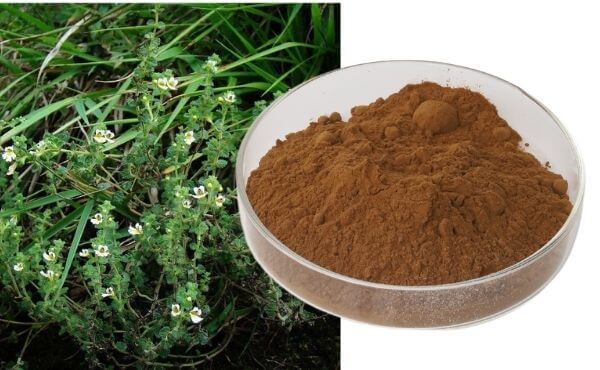
The Delicate Harvest: Sourcing Eyebright Extract from Chinese Suppliers
In the world of botanical extracts, some ingredients are defined by their abundance, others by their potency. Euphrasia officinalis, commonly known as eyebright, represents a different category altogether. This small, flowering herb, traditionally associated with herbal wellness, presents a unique set of challenges and considerations for wholesale sourcing. Unlike commodity herbs, eyebright extract is defined by its delicacy, its specific agricultural requirements, and a supply chain that balances wildcrafting with cultivation. For buyers looking to source this ingredient from China, understanding its particular narrative is essential.
The first reality of eyebright extract is its agricultural scale—or relative lack thereof. Eyebright is not a row crop grown in vast, industrial fields. It is a semi-parasitic plant that often thrives in specific alpine or meadow conditions. In China, significant wild and cultivated sources are found in regions like Yunnan, Sichuan, and other areas with clean, high-altitude pastures. This fundamentally shapes the market. Supply is more limited and fragmented than for herbs like ginger or turmeric. A supplier’s credibility is often tied directly to their connection to these specific growing regions and their knowledge of whether the material is truly wild-harvested (with sustainability checks) or cultivated. This origin story is the first, crucial chapter in the extract's quality.
Given this constrained and variable supply, the conversation around specification becomes paramount. Eyebright extract is typically sold as a simple, concentrated powder, often at ratios like 4:1, 5:1, or 10:1. Unlike extracts standardized for a single, dominant molecule (like curcumin or EGCG), eyebright’s value is traditionally linked to its full spectrum of compounds, including iridoid glycosides (like aucubin), tannins, and flavonoids. Therefore, a key marker of a serious supplier is their method of ensuring consistency. Do they blend batches to achieve a stable profile? Can they provide an HPLC fingerprint that shows a consistent compound pattern from one lot to the next, even if not standardized to one percentage? The focus shifts from a single-number guarantee to a pattern of chemical consistency.
The extraction process for a delicate herb like eyebright must be carefully managed to preserve its active constituents. Standard methods involve water or ethanol extraction at controlled temperatures, followed by low-heat spray drying to produce a fine, hygroscopic powder ranging in color from tan to dark brown. The extract has a characteristically bitter and astringent taste. A supplier should be able to describe their process in a way that demonstrates an understanding of the plant’s sensitivity; high-temperature or overly harsh extraction methods can degrade its delicate profile. This technical care is a sign of specialization.
In this niche market, the Certificate of Analysis (COA) serves as a tool for verification and safety, even more than for potency standardization. A comprehensive COA for eyebright extract must rigorously confirm:
-
Identity: Through TLC or HPLC fingerprinting against a reference sample.
-
Safety: Full panels for heavy metals, pesticide residues (crucial for wild-harvested material), and microbial contaminants.
-
Physical Properties: Details on appearance, moisture content, and solubility.
Because absolute potency can vary with the harvest, the COA’s role in proving the absence of contaminants and confirming the plant’s identity is critical. A supplier’s transparency in providing this, along with possible third-party verification, builds essential trust.
The commercial logistics of sourcing eyebright extract reflect its niche status. Minimum Order Quantities (MOQs) can be more flexible but also more variable. A dedicated supplier might offer MOQs as low as 10 kilograms, but the price per kilogram will be higher than for mass-market herbs. Lead times are intimately tied to the harvest cycle. The best material is processed shortly after the summer harvest. Planning must account for this seasonality; a request in late winter may face limited stock until the new crop is processed. Suppliers with consistent quality are often those who plan their purchases from growers well in advance.
Price is a direct reflection of the supply chain’s complexity. The costs involve the labor-intensive collection of a small, wild plant or the specialized cultivation of a non-commodity herb, careful handling, and low-volume extraction. A price that seems too good to be true likely indicates a problematic shortcut: the substitution with a different plant material, the use of spent or low-quality biomass, or the dilution of the extract with fillers. The value proposition lies in securing a genuine, carefully processed material, not in finding a bargain.
Finally, a supplier’s expertise is shown in their handling of regulatory and export logistics. They should understand the documentation needed for international markets, particularly concerning the justification of traditional use claims for dietary supplements. Proper packaging in moisture-proof, sealed containers is non-negotiable due to the extract’s hygroscopic nature. Their experience in navigating customs for botanical products adds practical value to the transaction.
Sourcing eyebright extract from China is a specialized endeavor. It moves away from the metrics of industrial agriculture and into the realm of botanic-specific sourcing. Success depends on partnering with a supplier who respects the herb’s particular nature—one who understands its origins, employs gentle processing, and prioritizes authentic, contaminant-free material over simplistic potency claims. It is a process built on traceability, technical care, and a shared understanding that some ingredients are defined not by transformative power, but by their specific, and delicate, integrity.